Will Lifting Heavy Make Me Bulky?
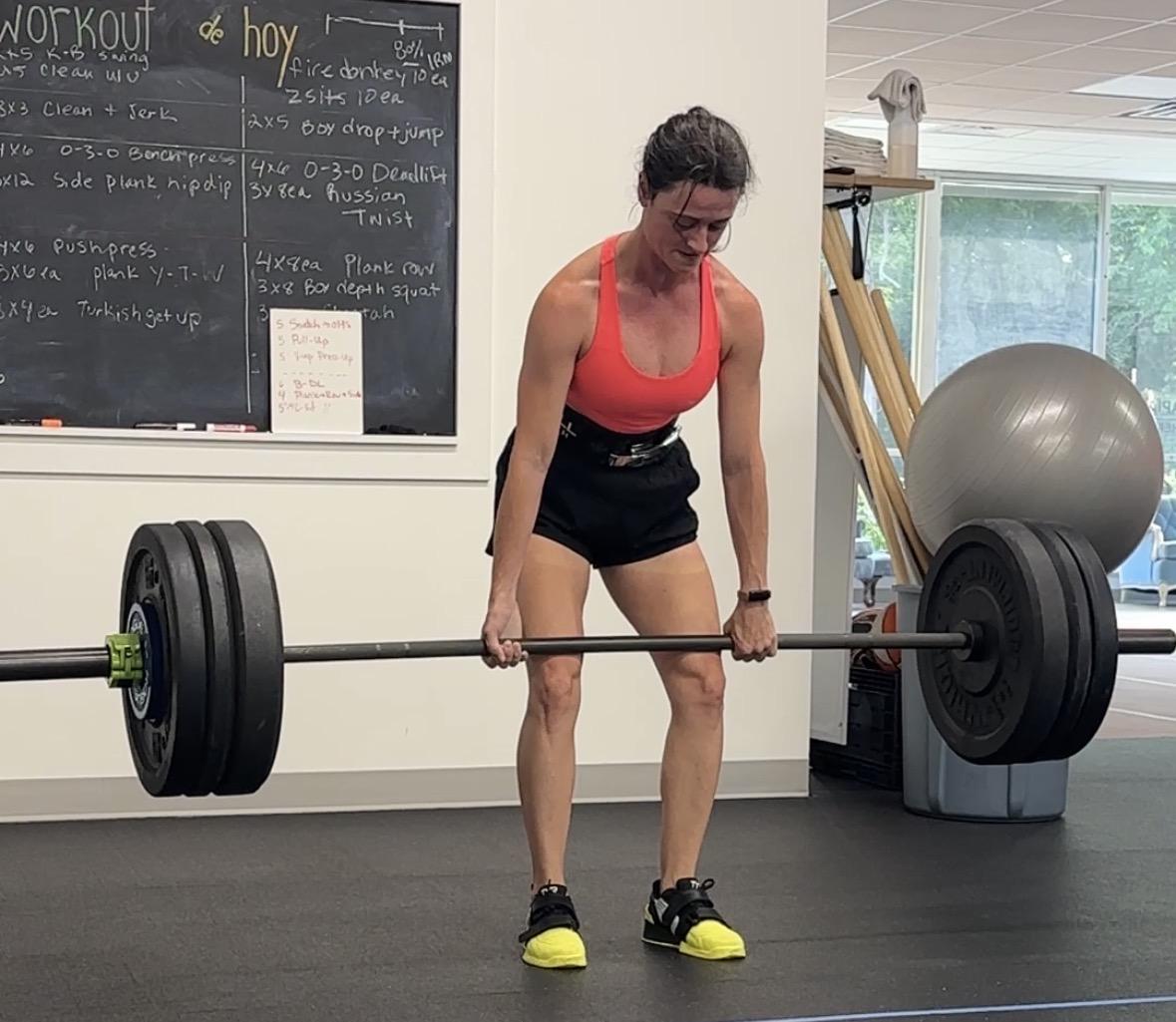
No. (Well — not unless you actually want to, and are willing to work a lot harder for it than you think.)
This is one of the questions we hear most at The Perfect Squat, especially from women and from anyone newer to lifting. Someone sees a “heavy” strength program and pictures competitive bodybuilders, understandably so, but that’s not the goal for most people walking through our doors. So let’s break down what actually causes that dramatic, muscularly “bulky” look, and why the general population lifting for strength, bone health, and longevity doesn’t end up there by accident.
What it actually takes to get “bulky”
The people you see with significant muscle size didn’t get there by picking up a heavy dumbbell twice a week. They typically:
- Train 5–6 days per week, often with dedicated sessions per muscle group
- Follow high-volume, hypertrophy-specific programming with lots of sets and reps designed specifically to maximize muscle size, not just strength
- Eat in a calorie-dense, carefully tracked surplus consistently consuming more energy than they burn, often with a specific protein target dialed in
- Do this consistently for years, not months
Research backs up how deliberate this process is. A comprehensive review on energy intake and muscle growth concluded that a calorie surplus is genuinely necessary to maximize hypertrophy. Muscle tissue itself is metabolically expensive to build, and without that extra energy available, growth is capped.¹ In other words: if you’re not consistently eating more than your body needs, significant size gain isn’t going to sneak up on you.
Why your 2–3 day/week strength program won’t do this
At The Perfect Squat, general strength programming for health and longevity typically looks like:
- 2–3 sessions per week for main compound lifts (squat, deadlift, push, pull patterns)
- Heavy loads, but low reps on those main lifts, often in the 3–6 rep range, sometimes lower
- Accessory work that’s productive for joint health, stability, and muscular balance, but nowhere near the volume needed to drive significant size
This combination is excellent for building real strength and protecting your bones and joints, but it is a completely different stimulus than what is required for visible hypertrophy. Research comparing training frequencies directly supports this: one within-subject study found that resistance training performed once a week produced strength and muscle cross-sectional area gains that were statistically similar to training the same muscle three times a week, when total volume wasn’t dramatically different.² A broader review of the literature on training frequency reached a similar conclusion. Once total training volume is accounted for, how many days a week you train has a much smaller effect on muscle growth than people assume.³ ⁴
Translation: it’s not “how heavy,” it’s the combination of frequency, volume, and a calorie surplus that drives bulk. On top of that, a 2–3 day/week strength program run with heavy, but low rep main lifts, plus accessory work, simply does not add up to that volume.
Why lifting heavy is still the goal; especially as we age
Here’s the part that matters more: heavy strength training (even at low frequency) is one of the most effective tools we have for healthy aging.
A systematic review of resistance training in older adults with sarcopenia found consistent, meaningful improvements in grip strength, muscle strength, and functional measures like the chair-stand test, which is the kind of strength that keeps you independent.⁵
Multiple studies show these strength and muscle-quality benefits show up in well-designed programs of just 2–3 sessions per week, not the high-frequency bodybuilding-style schedules people fear.⁵
So the honest answer is: lifting heavy won’t make you bulky. It will make you strong, resilient, and better equipped to move well for decades, which is exactly what we are building toward.
References
- Slater GJ, Dieter BP, Marsh DJ, Helms ER, Shaw G, Iraki J. Is an energy surplus required to maximize skeletal muscle hypertrophy associated with resistance training? Front Nutr. 2019;6:131.
- Neves RP, Vechin FC, Teixeira EL, da Silva DD, Ugrinowitsch C, Roschel H, Aihara AY, Tricoli V. Effect of different training frequencies on maximal strength performance and muscle hypertrophy in trained individuals—a within-subject design. PLoS One. 2022;17(10):e0276154.
- Ralston GW, Kilgore L, Wyatt FB, Buchan D, Baker JS. Weekly training frequency effects on strength gain: a meta-analysis. Sports Med Open. 2018;4:36.
- Grgic J, Schoenfeld BJ, Latella C. Resistance training frequency and skeletal muscle hypertrophy: a review of available evidence. J Sci Med Sport. 2019;22(4):361-370.
- Peng D, Zhang Y, Wang L, Zhang S. Effects of over 10 weeks of resistance training on muscle and bone mineral density in older people with sarcopenia over 70 years old: a systematic review and meta-analysis of randomized controlled trials. Geriatr Nurs. 2024;60:304-315.
