What Does Cupping Do?
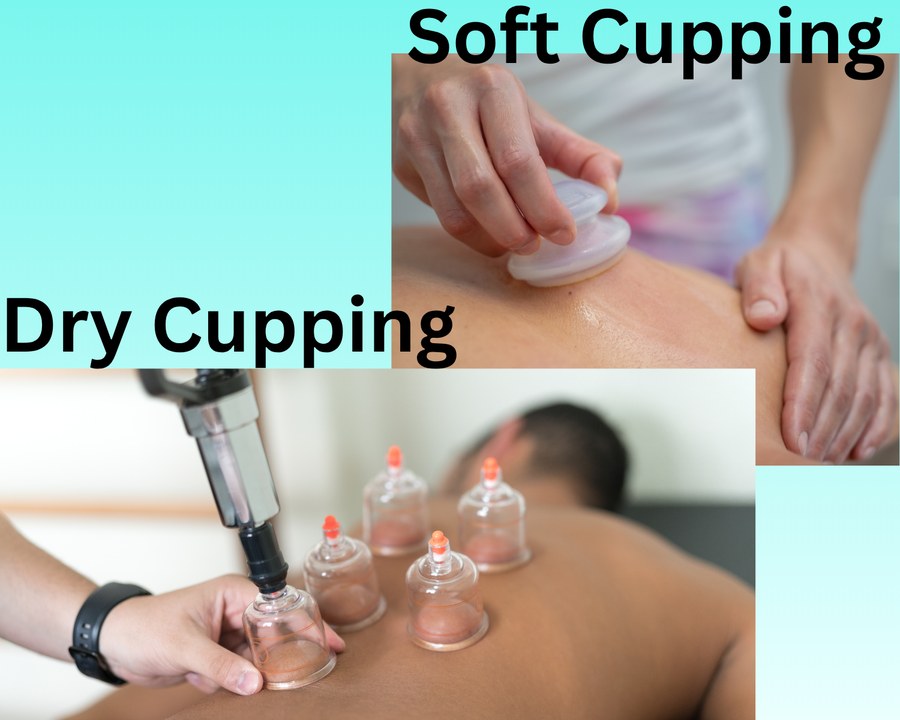
If you’ve spent any time in a treatment room at The Perfect Squat, you’ve probably seen the cups come out, or perhaps you’ve seen those round bruises on an athlete’s shoulders and you’ve probably had questions. Does it hurt? Why does it leave those circular marks? Is this just a trend, or is there something real going on underneath the suction? Here’s the honest, root-cause answer: a bit of both history and science, and here’s how we actually decide when (and if) it belongs in your plan.
Where Cupping Actually Comes From
Cupping isn’t new, and it is not Instagram-famous by accident. It is one of the oldest therapeutic techniques in recorded medicine. The earliest documented use appears in the Egyptian Ebers Papyrus around 1550 BC, and historical accounts describe cupping being practiced by Egyptians and Macedonians roughly 5,500 years ago, who later introduced the technique to the Greeks.1 From there it spread and was documented across an unusually wide range of civilizations: China, Rome, and within the broader traditions of the Middle East, before eventually declining in popularity in the United States through the late 19th and early 20th centuries.1
Traditionally, cupping is rooted in Traditional Chinese Medicine (TCM), where it is understood through the lens of restoring the flow of Qi, or energy, through the body. Practitioners believed that pain and dysfunction reflected a blockage or stagnation, and that drawing tissue upward into a cup could help resolve it.2 It is a genuinely Eastern medicine practice at its core, and that lineage matters. It is part of why cupping carries such deep cultural and historical roots in the first place.
How It Crossed Into Western Medicine and Sports Performance
Cupping’s re-emergence in the West was not gradual, in fact it was fairly sudden, and sports were the catalyst. When Michael Phelps showed up on the pool deck at the 2016 Rio Olympics with unmistakable circular marks across his shoulders, cupping went from a niche alternative therapy to a mainstream recovery tool almost overnight, with clinics reporting booking increases of 75% in the days that followed.
But this was not just a fad that physical therapy and sports medicine borrowed uncritically. Western practitioners reframed why cupping might work, shifting the explanation from energy flow toward mechanical and physiological effects with things like local blood flow, tissue mobility, and the nervous system’s response to negative pressure applied to skin and fascia. Orthopedic and sports medicine literature has since evaluated cupping specifically as a nonsurgical modality for musculoskeletal complaints, alongside other recovery tools like blood flow restriction training.3 In physical therapy and manual therapy circles today, cupping is generally discussed in terms of two very specific clinical targets: myofascial trigger points and fascial restrictions.
What the Research Actually Shows
We want to be completely transparent here, because that’s how we operate at The Perfect Squat. We do not follow trends or protocols, only evidence based and client specific measures.
Trigger points are localized, hyperirritable spots in a taut band of muscle, and they’re extremely common with some estimates suggesting 30% to 85% of patients present with them.4 Dry cupping (cupping using suction alone, without any bloodletting) has been studied specifically as a treatment for these trigger points. A pilot randomized trial found that dry cupping produced meaningful improvements in pain threshold, range of motion, and disability scores for patients with neck pain and trigger points, and that combining cupping with ischemic compression (sustained pressure) produced faster, larger improvements than either technique alone.4 Research on athletes has similarly shown that dry cupping applied to trapezius trigger points improved soft tissue compliance and reduced identifiable trigger points in the majority of participants after a month of treatment.5
At the same time, a broader systematic review comparing manual therapy, dry needling, and dry cupping for myofascial pain found that while manual therapy has moderate supporting evidence, the research base for dry cupping specifically is still thin, limited by small sample sizes and inconsistent study design, and does not yet outperform placebo in a definitive way.6 That does not mean cupping is ineffective. It means the honest answer is: cupping is a promising, low-risk manual therapy tool with real physiological effects on tissue and blood flow, but it is not a magic bullet, and it should never be sold to you as one.
One more note that matters: we only perform dry cupping at The Perfect Squat. There’s a second, older form called wet cupping, which involves small incisions and bloodletting, that is a distinctly different intervention with different risks and a different evidence base, and it is not something we do. Everything you’ll experience here is suction only.
How We Actually Use Cupping: As One Tool Among Many
Cupping is not, and never will be, a one-size-fits-all intervention at The Perfect Squat. If your doctor of physical therapy reaches for the cups, it is because we have a reason and believe it will help us help you reach your goals faster, not because it is the default move for every complaint that walks through the door.
Here’s what that process looks like:
- We investigate the root issue first. Cupping addresses local tissue restriction and trigger point sensitivity; it does not fix a movement pattern, a strength deficit, or a training error that’s been driving the problem in the first place. We are not interested in temporarily quieting a symptom that’s just going to come back next week.
- We match the plan to your preferences. Some people need the deeper release that comes with stationary or hard plastic cups. Others benefit more from soft, flexible cups, which typically create less bruising and allow us to actively glide and massage the tissue while it is still under suction — essentially combining cupping with movement-based myofascial work in real time. We’ll talk through which would be more beneficial for you.
- We layer in evidence-based interventions around it. Cupping might show up alongside dry needling, manual therapy, targeted strength work, or movement retraining, whatever the assessment actually points to. It is rarely the whole plan; it is a piece of it.
- We decide on strategy, not habit. The decision to use cupping, and which style of cupping, comes after we understand what’s actually restricted, what you respond well to, and what the research supports for your specific presentation.
That’s the same philosophy that drives everything we do here: root-cause treatment over symptom management, real conversation over assumptions, and tools chosen because they fit you, not because they’re trending. If you have more questions, ask. We are always happy to share the knowledge and experience we have gained over the years using our tools of the trade.
By: Dr. Sara Zehr, PT, DPT, MPH, Cert-DN
Board Certified Orthopedic Specialist
References
- Qureshi NA, Ali GI, Abushanab TS, El-Olemy AT, Alqaed MS, El-Subai IS, Al-Bedah AMN. History of cupping (Hijama): a narrative review of literature. J Integr Med. 2017;15(3):172-181.
- Al-Bedah AMN, Elsubai IS, Qureshi NA, et al. The medical perspective of cupping therapy: effects and mechanisms of action. J Tradit Complement Med. 2019;9(2):90-97.
- Trofa DP, Obana KK, Herndon CL, et al. The evidence for common nonsurgical modalities in sports medicine, part 2: cupping and blood flow restriction. J Am Acad Orthop Surg Glob Res Rev. 2020;4(1):e1900105.
- Nasb M, Qun X, Ruckmal Withanage C, Lingfeng X, Hong C. Dry cupping, ischemic compression, or their combination for the treatment of trigger points: a pilot randomized trial. J Altern Complement Med. 2020;26(1):44-50.
- Chiu YC, Manousakas I, Kuo SM, Shiao JW, Chen CL. Influence of quantified dry cupping on soft tissue compliance in athletes with myofascial pain syndrome. PLoS One. 2020;15(11):e0242371.
- Charles D, Hudgins T, MacNaughton J, Newman E, Tan J, Wigger M. A systematic review of manual therapy techniques, dry cupping and dry needling in the reduction of myofascial pain and myofascial trigger points. J Bodyw Mov Ther. 2019;23(3):539-546.
