Pain: Could it be a Gift?
My original goal for this blog was a well researched dissertation on the effects of physical therapy in cases where there are positive findings on diagnostic imaging. Can I still exercise if I have a meniscal tear on MRI? Can I still lift weights if I have arthritis on x-ray? Good topic. Important, surely- especially when one considers the importance of cost savings and holistic medicine.
And yet, as I sat with the topic I found myself feeling increasingly bored, shutdown, even numb. Feeling into this, I realized that this topic really doesn’t resonate with my experience. My clients are not asking these questions. And, if they are, they’re not asking them because they’re worried about what’s showing up on the image or even what they’re being told about the image. They’re worried about something much deeper. So, what does matter to them?
I’ve been a practicing Orthopaedic clinician now for 15+ years. That’s a lot of cases of joint pain from all different types of people. At first glance, most come to me asking for help to get out of pain in order to get back to something of value: work, sport, a leisure activity, performance. I once worked with a man experiencing homelessness who wanted help with his foot pain in order to maintain his daily walking regimen of 20+ miles a day. After all this time as a clinician and one journeying through life I now wonder, is it really pain that you and I seek to eliminate from life or is it something more?
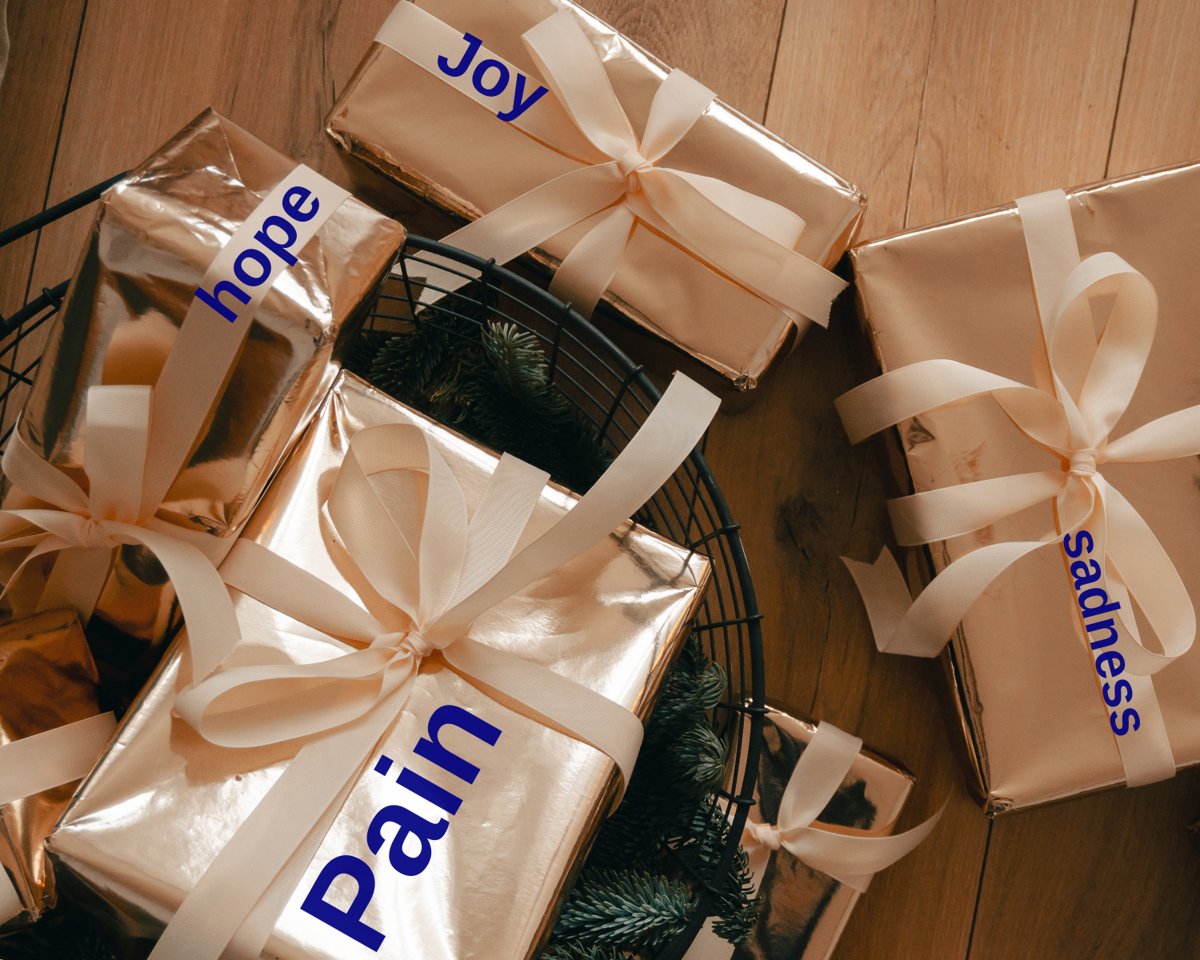
In the book, The Gift of Pain, author Paul Brand re-conceptualizes pain as a gift rather than a burden (Brand and Yancey, 1997). His decades-long work as a physician and surgeon puts him in direct contact with persons experiencing Hansen’s disease, commonly known as leprosy. In this disease, the fibers that sense pain are slowly overtaken by a bacterium that blunts them and eventually eliminates them, rendering a person incapable of experiencing pain. Without this experience, one cannot tell the difference between healthy, hurtful or harmful input into the body and eventually dies by the very thing they are incapable of feeling. If, at the level of the body, pain keeps us safe, then what does it do at the level of the psyche or, even deeper, at the level of attachment to each other? As social beings, could it be that pain is the very thing that maintains and even fertilizes our connection to each other? Could something so horrible actually be miraculous? Pushing the construct even further, the author asks, could it be that our deepest source of pain is precisely disconnection from each other and life is a journey of reclaiming the very thing we were meant for: love? Expounding on these principles the author concludes, pain is a gift to heed and affirm rather than a burden to eliminate and vilify.
I read this book early in my career and was profoundly affected by it. My experience has since proven Dr. Brand correct. And so has the research. We now know that pain is much more complex than a simple sensory experience coming from the outside in. The worlds of psychology, neurology, psychiatry, rehabilitation services and many other branches of science are now colliding as the human experience around pain and human flourishing comes together.
And so I return to my original question, what matters to those who have sought and continue to seek my help? Is it really pain we seek to eliminate or something more? The faces of so many flash before me as do the desires that flourish from their heart: I wish to get back to running to run cross country with my daughter; I wish to hike up a mountain to honor my dad’s cancer diagnosis; I wish to return to climbing to spend time with my wife; I wish to get out of pain to run with my friends in track and field; I wish to return to ultra marathons to show my infant son anything is possible. And my mind turns to those who’ve crossed my path that have suffered the unspeakable. The female offender who wishes to stay active so she can walk out of prison on a walker into the arms of her children. The male offender wishes to stay strong so he can work a coffee farm in Costa Rica after serving a 29 year sentence in order to provide for a future family. The woman with chronic pain and complex trauma who wishes to get into weight lifting in order to relish in the joy of movement with her friends. Connection. Love. So much love pushing each one outward past his or her pain. Not around it but through it towards another, into the arms of another because that’s where the human heart finds itself: for love and in love. That is its beginning and its destiny.
In the YouTube documentary “A Kiss for the World”, music director Iñigo Pirfano explains Beethoven’s 9th Symphony, known for its emphasis on the finale “Ode to Joy”, as a deeply nuanced and often overlooked series of movements created to describe the course of a human life (watch on YouTube). Sick and nearly blind at the time of its writing, Beethoven leans into his own experience to highlight the mystery of life within every human person. The first movement begins with the introduction of the human person into the world with their beauty revealed at birth accompanied by a piercing cry. Pain and life are inseparable, even as love prevails. As the symphony proceeds we enter into subsequent movements that detail the great mystery of the human heart as it unfolds in the silence of its own searching, its own questions and even its own existential quest for meaning. And yet, thrusting onward, the last movement of Beethoven’s 9th Symphony reveals the fulfillment of the human journey, the ultimate expression of the human heart: a joyous outburst with the completion of this quest as it finds itself returning home to connection with others, deep attachment, love. Love: its beginning and its destiny.
I feel into this reality and look back on my experience and settle into wonder. Movement. Pain. Love. Yes, the human body holds great mysteries that unfold everyday right before me in those who seek my help. And so I share this with you in the hopes that it resonates so that you can come to see that your pain is a gift, a movement forward to your ultimate destiny: love.
Germaine
By: Dr. Germaine Herman, PT, DPT, FAAOMPT
Board Certified Orthopedic Specialist
Somatic Experiencing Informed Therapist
Internal Family Systems (IFS) Level 1 Trained
Reference
Brand, P., & Yancey, P. (1997). The gift of pain: Why we hurt and what we can do about it. Zondervan.
