Why Should I Be Able to Squat My Body Weight?
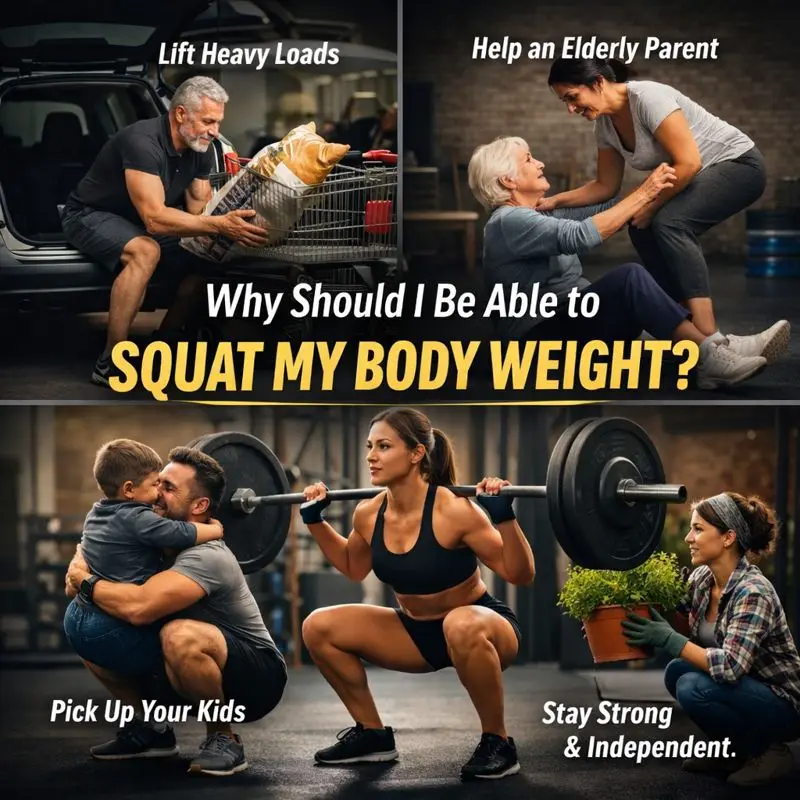
When people hear the phrase “squat your body weight,” they often think it sounds like a gym challenge or something reserved for athletes. But this benchmark has very little to do with bragging rights and everything to do with how well your body is prepared for real life.
Being able to squat your body weight is not about becoming a powerlifter. It’s about building the strength you need to stay independent, confident, and capable as you move through life.
Let’s break down why this matters.
How Aging Affects Strength, Bones, and Balance
As we age, our bodies naturally change. These changes are normal, but they are not inevitable in their severity.
Muscle Mass
Starting as early as our 30s, we begin to lose muscle mass in a process known as sarcopenia. Without strength training, this loss accelerates over time. Less muscle means less power, lower endurance, and greater difficulty with everyday tasks like climbing stairs, carrying groceries, or getting up from the floor.
Bone Density
Bone density also declines with age, increasing the risk of fractures and osteoporosis (more severely in women than men). What many people don’t realize is that bones respond to load. When we challenge them with resistance training, they adapt and become stronger.
Balance and Stability
Strength and balance are deeply connected. Strong hips, legs, and core muscles improve your ability to react quickly, stabilize yourself, and prevent falls. When strength fades, balance often goes with it.
According to the National Institute on Aging, regular strength training helps maintain muscle mass, protects bone health, and improves balance, all of which are critical for staying active and independent as we get older.
Why Strength Training Is So Powerful
Strength training is one of the most effective tools we have for aging well.
It Slows Muscle Loss and Can Even Reverse It
No matter your age, your body can adapt. Research consistently shows that people in their 40s, 60s, 70s, and beyond can build strength when they train consistently and appropriately.
It Helps Maintain Bone Density
Movements like squats, deadlifts, and lunges apply healthy stress to your bones. That stress signals your body to maintain and strengthen bone tissue, reducing the risk of fractures later in life.
Strong Muscles Improve Balance
Your muscles act as your body’s built-in stabilizers. Strong legs and hips help you catch yourself when you stumble, move confidently on uneven ground, and maintain posture throughout the day.
Strength training doesn’t just make you stronger. It makes you safer, steadier, and more resilient.
Why Squatting Your Body Weight Matters in Real Life
Here’s where the conversation shifts from gym numbers to daily function.
If you can squat your body weight, you’re building a reserve of strength that carries over into everyday situations like:
- Lifting a heavy bag of dog food from the cart into your trunk
- Helping an elderly parent stand up from the floor
- Picking up a child or grandchild and carrying them around
- Moving furniture, hauling groceries, gardening, or shoveling snow
These moments don’t come with a warm-up or perfect conditions. Life simply asks, and your body has to answer.
When you train to squat your body weight, you’re training for real-world demands. You’re creating a buffer between daily life and injury.
What If I Can’t Squat My Body Weight?
Squatting your body weight is a recommendation, not a rule. It is a helpful target, not a judgment of your worth or ability.
Three Things Matter More Than the Number
- Your Health History – Past injuries, surgeries, joint conditions, and medical considerations all influence what your path looks like.
- Your Training Background – Someone who has never lifted weights will progress differently than someone who has trained for years. Both are valid starting points.
- Your Commitment To Progress – Consistency beats perfection. Small, steady improvements over time matter far more than where you begin.
The Power of Progressive, Individualized Training
Strength is not built overnight. The safest and most effective approach includes:
- Gradual increases in load
- Focus on good technique
- A program tailored to your body, your goals, and your history
The real success is not hitting a single number. It’s moving forward with confidence and building strength that supports your life.
So… Why Should You Be Able to Squat Your Body Weight?
It represents:
- Independence as you age
- Protection against injury
- Confidence in your body
- The ability to help others when they need you
- The freedom to say “yes” to the activities you love
The real question isn’t:
Should I be able to squat my body weight?
It’s:
What level of strength do I want to carry into the next 10, 20, or 30 years of my life?
And the good news is this: wherever you are starting from, strength is something you can build.
References
National Institute on Aging. How can strength training build healthier bodies as we age? https://www.nia.nih.gov/news/how-can-strength-training-build-healthier-bodies-we-age#strength
HOLVIALA, et al.EFFECTS OF STRENGTH TRAINING ON MUSCLE STRENGTH CHARACTERISTICS,FUNCTIONAL CAPABILITIES, AND BALANCE IN MIDDLE-AGED AND OLDER WOMEN. Journal of Strength and Conditioning Research 20(2):p 336-344, May 2006.
Latella, C., van den Hoek, D., Wolf, M. et al. Using Powerlifting Athletes to Determine Strength Adaptations Across Ages in Males and Females: A Longitudinal Growth Modelling Approach. Sports Med 54, 753–774 (2024). https://doi.org/10.1007/s40279-023-01962-6
Behm et al. Minimalist Training: Is Lower Dosage or Intensity Resistance Training Effective to Improve Physical Fitness? A Narrative Review. Sports Med. 2024 Feb;54(2):289-302. doi: 10.1007/s40279-023-01949-3. Epub 2023 Nov 4. PMID: 37924459; PMCID: PMC10933173.
