How Do You Design A Workout Routine?
Why Workout Design Matters
We have all been there, wondering what I should do for my workout today or how do I even get started with a workout routine? There is a lot that goes into figuring out the answer to what may appear to be a very simple question on the surface. Today, I will go through the basic questions that need to be considered when designing a workout routine as well as focus in on how that may look for me to design a strength program for someone in their 40-50’s.
Modes of Exercise
One of the first questions to ask is what is the goal of the workout. Do I want to improve cardiovascular function (heart health), endurance, strength, or power? Below are some examples of our two main branches of exercise:
Cardiovascular Exercise
● Walking
● Running
● Swimming
● Cycling
● Rowing
● Pickleball
● Non-stop snow shoveling!
Strength Training
● Weight lifting
● Jumping (Power)
● Pilates – Core focuses strength
● Mobility – strength through a full range
● Carrying 40# bag of dog food
● The Grocery Bag Carry (all groceries in single trip from car to house)
Obviously, there can be a lot of carryover between these two main branches. Perhaps you are trying kickboxing, which has a combination of quick power moves as well as endurance to get through a 4 minute round. Another common example is HIIT (high intensity interval training) where you combine various moves, some with weights or jumps with minimal rest to challenge both the cardiovascular and strength systems. It is important to note that especially as we age, having a variety of modes of exercise is key. Only lifting heavy weights and no cardio leads to strong muscles but poor heart health. Only playing pickleball leads to a lot of fun with some cardio benefits, but weak skeletal muscles susceptible to injury.
I almost forgot to mention, one very important question to ask yourself, is what do I enjoy? Because we all know if it’s always a matter of the will and not enjoyable, then it is less likely to happen 100% of the time!
Why Strength Training Becomes the Priority in Your 40s and 50s
Aging, they say, is a matter of perspective. I agree, we are only as old as we feel! However, science will argue there are a few key things happening in our bodies as the years pass by that greatly affect our physical health. Let’s cover a couple of the biggies. First sarcopenia, which is the loss of muscle fibers, really picks up at the age of fifty. Specifically, we start to lose type II or our fast-twitch fibers. These fibers help us take a quick step to avoid a fall, or get the paddle in position to return hot shots fired to our non-dominant side. We can minimize the risks and train our muscles to respond quickly when we design routines appropriately.
Another thing to think about is muscle strength that we use to protect joints and keep moving through full ranges so that we maintain independence and functional prowess. Strength is not only about lifting heavy things, obviously that is functional for those heavy water flats, animal food bags, or carrying around kids of various sizes. Strength is also used to move our joints so that we can stoop low to reach a pan in the bottom cabinet, get up off the floor smoothly, and play our favorite sport be it 4-square or catch.
What “Functional Strength” Actually Means
We hinted at it already, but functional strength is the ability to move your body or everyday objects through space. Some people, I hear, think squats should be avoided or are too hard, but I argue, for obvious reasons, that everybody squats. Consider your daily routine, hopefully, you sat down and got up from the toilet at some point, a squat. Maybe you sat down on a couch and stood up, another squat.
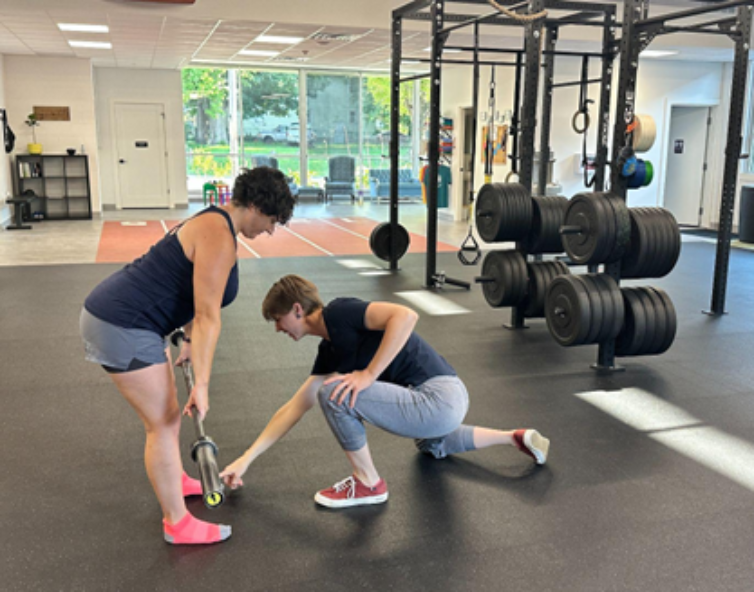
Deadlifts are also a movement that we do often, but can seem scary in the gym sense. Next time you get intimidated by deadlifts, think of the last time you stood next to the dishwasher and kept your legs fairly straight while bending to lift out a pan from the bottom rack, a deadlift. Perhaps you found the remote control on the ground and leg one leg out behind you while reaching down to grab the remote, a single leg deadlift.
We do functional lifting day in and day out, in the gym adding functional strength to your routine not only prepares you for life tasks, but it keeps all angles and planes strong instead of boring old machine work.
Key Principles for Designing a Strength-Based Routine (40s–50s)
Start With Mobility and Control
Learning the motion is key to protect joints and stay safe. It can take 4-6 weeks for your brain and muscles to learn the movement pattern well, so stick with it and keep the resistance or weights lifted light in order to maximize eventual gains.
Prioritize Compound Movements
Starting with exercises that involve multiple joints, such as squats and push-ups, use multiple muscle groups and are very functional. This means it will translate to real life benefits faster that grabbing a dumbbell and doing bicep curls.
Train All Planes of Motion
A lot of machines and traditional lifts work the front to back plane, squats included! It is important to add in side to side movements and rotational pulls and pushes to balance out muscles, protect joints, and keep functionally fit!
Progress Gradually and Intentionally
Strength is built over time, remember that 4-6 week window to just learn the movement well. To gain strength it takes another 4 weeks of smart work to get muscles stronger by one grade. Progressive overload is a key concept to gradually work into strength gains. It is possible to do too much too soon.
How Often Should You Strength Train?
The research says adults should have strength training as part of their health and wellness routine 2-3 days per week, doing 8 different lifts or movements each day, with the intensity goal including 1-2 power moves, 2-3 movements at 80% effort, and the rest complimentary exercises anywhere from 40-70% effort.
Common Mistakes to Avoid
The biggest mistake is doing nothing because you are afraid of doing the wrong thing. At bare minimum go get started on machines at a light weight, start a walking routine with a friend, just get started. After that, a lot of people make the mistake of never progressing past step one.
Whether that be cardio or strength training, our bodies are constantly changing and being challenged in the day to day with different activities, so our training needs to mimic and prepare us for variability. When in doubt, ask a trained professional to help get you started and to prepare a program designed with you, your goals, and your background in mind. Never push through pain, pain is a way of our body telling us something is up. Sore, okay, tight, sure, but not pain.
Putting It All Together
Let’s put it all together to help you get started on a well designed routine.
- Consider your goals i.e. play pickleball
- Write out an outline i.e. Monday walk/jog 30 minutes, Tuesday lift, Wednesday pickleball 1 hour, Thursday rest, Friday lift, Saturday pickleball 2 hours
- Plan out your routine for lifting, starting light to focus on form
| Exercise | Weight | Sets x Reps | Notes |
|---|---|---|---|
|
Squats |
20# DB |
3 x 12 |
Form keys: knees in line with toes and buttock back |
|
Lat pull down |
40# pulley |
3 x 10 |
Shoulder blades down and back |
|
1 leg deadlift |
BW |
3 x 8 each |
Soft knee, hold on for balance to learn |
|
Push-ups |
BW |
3 x 8 |
Hands on bench to keep good form |
4. Ask a friend to go with you or meet you for a walk after so you can celebrate that you started your new routine!
Closing Thought
Strength training does not avoid aging; however, it does lead to aging stronger, more confidently, and with more options. Consider your goals over the next decade or two of life and if they include any activities and events now is the time to get started so you can enjoy them down the road.
By: Sara Zehr, PT, DPT, MPH, Board Certified Orthopedic Specialist
(master of combination movements and fun strength programming)
